
Massage & Bodywork, Tapestry Life Resource

The Benefits of Craniosacral Therapy

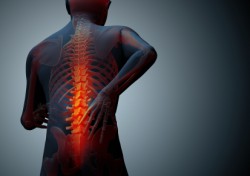
Used with permission. Image by Salvatore Vuono at FreeDigitalPhotos.net.
Note: When last visited, Vuono’s portfolio was no longer on Free Digital Photos; however, this photo is still being classified as public domain.

Craniosacral therapy is a gentle treatment approach that works with the natural, self-correcting mechanism of the body and the craniosacral system to detect and release restrictions in mobility and enhance the function of the craniosacral system.

The craniosacral system includes the membranes and fluids that surround and protect the brain, spinal cord, and nerves. Restrictions in the rhythmical movement of the craniosacral system can cause sensory, motor or neurological dysfunction.

The techniques of Craniosacral Therapy were developed by osteopathic physician John E. Upledger, founder of the Upledger Institute. Dr. Upledger based his method on the research of Dr. William Sutherland, another osteopath, who is considered the father of craniosacral therapy.

Sutherland observed that, contrary to general belief, the bones of the skull do not fuse completely in early childhood. This means that through very gentle touch, they can be moved, and consequently, the tissues attached to them can be moved. Furthermore, early in his career, Dr. Upledger realized that the membranes surrounding the brain and spinal cord move in a rhythm, different from respiration or the heartbeat. He developed a technique to palpate and manipulate this craniosacral rhythm.

“Dr. John” taught this technique internationally and widely published his research on the efficacy of the treatment protocol. His research is continuing under the auspices of the Institute and the many students and teachers who continue to scientifically validate the usefulness of CST in treating a variety of complaints.

So what is the technique? Using pressure of about five grams, the therapist is able to palpate or feel the rhythm of the craniosacral fluid moving through the tissues of her clients and uses her evaluation of the flow and restrictions to focus treatment on the causes of dysfunction rather than only on the symptoms. She used the bones, mostly in the head and spine, to manipulate the tissues and fluid that affect the whole body.

The client lies on the heated treatment table and usually remains clothed. It may seem like not much is happening because the touch is so light and the therapist does not move around a lot. Many clients go to sleep, and that is fine. The sense of relaxation may continue for several days as the body continues to heal itself and achieve a greater state of balance. Clients often claim their pain is alleviated for longer periods and their mood is improved. The effects are subtle and tend to build with treatment.

The therapy has been used successfully to treat such disorders as headaches, neck and back pain, TMJ, fibromyalgia, motor coordination difficulties, vertigo, edema, neuropathy and nerve compression syndromes. It is also good for chronic conditions that may have an emotional component such as fibromyalgia, attention deficit disorder, anxiety and depression, and even learning problems.

Craniosacral Therapy also has a strong component that focuses on mobilization of the fascia, the continuous sheet of connective tissue that surrounds the organs, muscles, bones, nerves, vessels and other structures of the body. This three-dimensional fascia runs head to toe, front to back and exterior to interior in the body.

Release of fascial restrictions in one part of the body can affect painful tissues in other parts of the body and cause them to also release. The craniosacral system an be used as an indicator of fascial restriction, and then a gentle myofascial release technique can be used to normalize muscle tone, decrease pain, decrease swelling and increase soft tissue and joint mobility. The benefits are usually immediate. For this reason, CST is considered to be a deep tissue modality even though the client does not disrobe and even though the pressure is only 5 grams.

People of all ages, from babies to grandparents, can benefits from craniosacral therapy. In fact, unless there is a high-risk condition affecting the brain or spinal cord, like an aneurysm or tumor, most people can benefit from CST. Recent research even suggests it is helpful for people with traumatic head injury or autism. In any event, your therapist will obtain a medical history before doing a treatment and may ask you to get doctor’s approval if anything seems contraindicated.

Massage & Bodywork, Tapestry Life Resource

Deep Tissue Massage Explained

Therapist massaging back of client
A deep tissue massage is slow work and often focuses on one part of the body for the full session.

Deep tissue massage does not have to be painful. That is a misconception that we at Tapestry Life Resources and Hands On Massage Therapy are trying to dispel.

In fact, if, on a scale of one to ten, your massage goes past the pain threshold of a six or seven, the work is ineffective and probably doing more harm than good. That is because the muscles contract against the pain, instead of lengthening and relaxing.

In general, massage techniques that are used for Swedish or relaxation massage can be used effectively for deeper work. The aim in both is to loosen adhesions, stretch and mobilize connective tissue, and improve circulation and lymph flow. In fact, a good Swedish massage can be the first line of defense against injury since healthy, flexible tissues are less likely to get hurt in the first place.

What separates deep tissue massage from Swedish massage is the depth of the pressure and the speed of the massage. The rule is that the deeper you go, the slower you go. Thus, if you are really having trouble with an area of your body, you may only have time in an hour massage to get that area worked. A full-body massage that is all deep work lasts at least 90 minutes and could last two hours. A look at the way muscles are layered may explain why.

In order to reach the deeper muscles, the massage therapist must first release the superficial muscles. To do this, the therapist may use fingers, hands, fists, knuckles, forearms, elbows, or various massage tools. This can take some time before the superficial muscles are relaxed enough for the deeper muscles to be reached. Less oil or cream is used so that there is less slip as greater pressure is slowly applied. Heat, cold, and sprays may also be used.

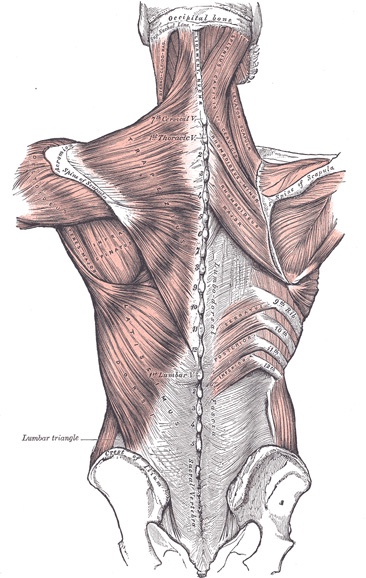
Muscles of back
Superficial and deep muscles of the back
Grey’s Anatomy

Let’s use the back muscles for an example. The superficial muscles of the back act on the upper limb. The intermediate muscles act on the ribs and thorax; the deepest muscles of the back are responsible for keeping the body erect.

If trigger points are found, the therapist may strip, friction or compress these to gain a release. Trigger points are taut bands of muscle fiber that do not relax and that keep the muscle in a shortened state. They are usually more painful than the surrounding muscle tissue, and they refer pain to other parts of the body. Trigger point therapy, also called neuromuscular therapy, is often combined with deep tissue massage. Its focus is these taut bands, and although trigger points can hurt as they are released, the therapist should not push beyond the pain threshold of a six or seven.

A true deep tissue massage focuses on the spreading and lengthening of the connective tissue sheath. Deep tissue techniques are based on the work of Ida Rolf who developed a technique called Structural Integration. Her principles have been widely adapted into other connective tissue massage therapies. 

Beneath the skin and connecting every part of the body is a fibrous sheet of connective tissue called fascia. The fascia surrounds the bones, muscles, and organs. Indeed, although it is is basically a single sheet of mesh, it wraps individual tissue fibers as well as the whole structure (ie, individual muscle fibers and the whole muscle). Thus, connective tissue health is essential to painless movement. If the surrounding fascia is restricted, so is the muscle. Denser connective tissue forms the tendons and ligaments.

Connective tissue is unique in that it is elastic, which allows it to be elongated. However, the therapist must employ precise levels of palpation, pressure and energy to effectively make changes in the tissue. Simply massaging, kneading or compressing the fascia does not change or elongate the connective tissue. Fascia and muscle are different types of tissue, and they require different approaches. Your therapist will be trained to apply these techniques.

The fascial layers are worked one at a time, progressing from superficial to deep just as with the muscle layers. The superficial layers must lengthen and become more elastic and supple before going to the next, deeper layer.

Often the reason deep tissue massage hurts is that the therapist may be trying to achieve releases too quickly. While it is appropriate to work at your pain threshold, the therapist should not exceed your threshold. If she does, it is up to you to tell her so. Furthermore, you may have to decide to forego a full-body massage and ask that the therapist concentrate on one troublesome area so she is not rushed. Alternately, you could schedule a longer massage appointment.

Finally, you need to drink water and take a hot bath in Epsom salts or apple cider vinegar when you get home. You always hear this after a massage, but do you do it? The water flushes toxins and helps keep the connective tissues hydrated so they can heal. The heat of the bath and the properties of the salts or vinegar also remove toxins and help relax the body more fully. Stretching or other exercises may also be helpful.

Deep work does not have to be painful if your therapist is knowledgeable and if you communicate with her about your pain level, You should be willing to limit your massage to a trouble area, to schedule a longer massage session, and/or to return for a follow-up visit to achieve the best results with minimal pain. Finally, you need to practice self-care and follow your therapist’s advice about proper hydration and post-massage detoxifying.

Massage & Bodywork, Tapestry Life Resource

What is Swedish Massage— Really?

If you have heard massage therapists talk about Swedish massage but are unsure just what that means, you are not alone. The term is so confusing that many massage practices have started using terms like therapeutic massage and relaxation massage to describe the technique and avoid confusion.

While the term Swedish massage may conjure up images of a tall, blonde Bjorn pounding on your back, the term actually comes from the nationality of the technique’s originator, Per Henrick Ling. It is characterized by the application of firm but gentle pressure on the more superficial muscles, which presses them against the deeper muscles and bone in order to induce relaxation to the tissues. Swedish is the most popular form of massage in the world.

Recently, I’ve had more and more clients asking for Swedish massage. They are stressed, and although they may have some general soreness or stiffness, the thing they want most is to relax and maybe to get a good night’s sleep. They like the variety of techniques in Swedish massage and the ways you can vary the pressure for different results.

Stripping is a technique that combines effleurage and friction to help therapists release the tension in the suboccipital muscles of the neck.

There are five essential techniques in Swedish massage with a sixth added by some. The first is effleurage, which is a long, gliding stroke whose purpose is to improve lymphatic flow and circulation and to warm and relax the tissues. Next is petrissage, a kneading stroke that rolls and lifts the muscles and pulls them away from the bones. Third is friction, which employs small circular pressure to muscles to release knots and adhesions. After friction comes vibration, a techniques that shakes or vibrates the body to stimulate circulation. Tapotement includes percussion movements such as hacking, cupping, and tapping. The final (added) stroke includes bending and tractionwhereby the tissues are gently stretched and mobilized.

One reason that Swedish massage is so popular is that it benefits every major system of the body in some way. Primarily, it relieves physical, emotional and mental stress. It releases accumulated toxins from the tissues and flushes them out of the kidneys, lymphatics, and circulatory system. It increases oxygen flow throughout the body without adding a work load burden to the heart. 

Swedish massage also soothes the nervous system and helps clients manage pain by releasing endorphins, the feel-good hormones, into the blood-stream. It can improve digestion and relieve edema or swelling.

The first modality we learned at The Whole You School of Massage was Swedish, and we spent several weeks on it before we worked on anyone other than each other. Clients generally undress fully and are massage in the supine and prone positions and sometimes in a side-lying position. Lubricant is used and sometimes essential oils or analgesics. The techniques used in Swedish can be applied to chair massage as well although the client is usually clothed if getting chair massage.

As mentioned above, another reason for the popularity of Swedish massage is that it can be individualized to the client’s specific needs by varying the strokes and the degree of pressure of the strokes from very light to deeper and heavier. Indeed, Swedish massage forms the foundation for several other massage modalities, including sports massage and deep tissue massage, and it is easily combined with other modalities to give the client a truly personalized experience.

Continuing Education, Human energy field, Massage & Bodywork

Unwinding the Meridians

I recently took a new Craniosacral Therapy class from the Upledger Institute on unwinding the meridians. We studied the rudiments of Traditional Chinese Medicine in massage school, and there was a good bit of TCM on the NC Board of Massage and Bodywork Therapy licensing exam, which I took in 2007. (Wow! Have I been doing massage that long?)

We also took Touch for Health Level 1 in massage school as the owner of the now closed Whole You School of Massage and Bodywork, Cheryl Shew, believed it was one of the best classes to prepare us for the massage exam. It is based on TCM and applied kinesiology and is an incredibly effective method for balancing meridians and toning muscles.

After I finished massage school, I took the Levels, 2, 3, and 4 Touch for Health classes, and my teachers, Larry and Arlene Green, offer refreshers and online “get together” frequently. When I began the Unwinding Meridians class, I suspected my TFH books and charts might come in handy, I was right. Much of the material I had previously learned was applicable to the new technique.

I realized I needed to brush up on things though, and it actually got me excited. The more something in the class triggered previous knowledge, the more confident I felt that this is a modality I can use.

So what is it that got me so pumped? Well first of all, I could actually feel the craniosacral rhythm/energy movement when I put my fingers on the acupuncture points. As with traditional craniosacral therapy, the touch is light and less like acupressure or Shiatsu massage.

Before I tried the work on a client, I made sure to look up the acupuncture points for a problem I know she has. I could feel the rhythm shifting and changing even more strongly, maybe because I was working on a real problem. She shared my excitement.

Using craniosacral therapy to unwind the meridians can help with the emotions as well. In Traditional Chinese Medicine, each meridian is associated with organs, emotions, seasons, colors, and a whole wealth of other correspondences. If a client has several points that need to unwind along the same meridian, you can sometime discover old trauma that is the source of chronic pain that seems to have no cause by asking questions related to the meridian correspondences. The inner physician knows and will often lead you to the truth you may be avoiding.

Unwinding the Meridians with Craniosacral Therapy is now a tool in my toolbox. I hope the more that I use it, the better I will get at help clients become pain-free and enjoy life more.

Massage & Bodywork

Combining Massage and Chiropractic

Person with aching spineHave you noticed that many chiropractors are hiring massage therapists? Has your chiropractor suggested massage may help? Many clients are finding that combining massage and chiropractic adjustments can speed recovery from injuries or limited mobility.

The musculoskeletal system is a marvel of cooperation and support. Bones provide strength, protection and structure, and muscles and fascia provide movement. Muscles are attached to the bones by tendons. When muscles become shortened or tight, they increase the tension on their attachment points and can actually pull the bone from its natural position.

Similarly, spinal misalignments can create pain patterns that cause a compensatory adjustment in posture that results in contracted muscles when they should be relaxed. Trigger points form. Before you know it, you have a vicious cycle of misalignment and pain.

Sitting at a computer, driving for long periods, and digging in the garden are just a few activities that can cause poor posture and muscle strain. For example, if you work at a desk or computer terminal all day, your trapezius muscles could shorten. This in turn could cause your cervical spine to misalign and cause pressure on disks and nerves. The postural problems become cyclical. The shortened muscles compress the spine and the spinal misalignment causes the muscles to splint in order to avoid additional injury. This is one instance both massage and chiropractic can help.

Massage supports chiropractic. Adjustments last longer because it releases muscle tension that might otherwise pull your joints into misalignment again, and it helps the adjustment to proceed with less discomfort when the soft tissues have been relaxed. It helps you recover more quickly by stimulating the circulation and thus bringing healing blood and nutrients to the pain site. Finally, it can help you relax before your chiropractic adjustment.

Similarly, chiropractic supports massage. Joint mobilization received during an adjustment can help relax the deepest layers of soft tissue that are sometimes difficult to comfortably reach during a massage, and the tissues around and misalignment often heal quickly once they are not longer trying to splint a misaligned joint. Finally, a chiropractor can use other diagnostic tools like x-rays to rule out other causes of pain.

As more and more clients discover the benefits of complimentary medicine, they are touting the combined benefits of massage and chiropractic. These natural therapies focus on treating the cause of pain rather than the symptoms and emphasize preventative care as well as pain relief. They are holistic therapies that are safe and effective and can work as alternatives to drugs or on conjunction with more traditional, allopathic treatments. Used together, they can help you achieve your optimum health and wellness goals.

Massage & Bodywork, Tapestry Life Resource

Massage and Mental Health

woman getting massage
The skin is our largest sensory organ. Massage can create a sense of peace and well-being through the power of touch.

It is sometimes easy to emphasize the physical benefits of massage and forget the mental health benefits of regular bodywork. The physical benefits are more immediately recognizable, but the mental benefits can be more lasting.

Numerous clinical trials have evaluated the effects of massage on mental and emotional health, and the results are impressive. For example, studies indicate that massage and psychotherapy given to women suffering from postpartum depression had significantly greater improvement in both depression and anxiety than did groups who received only psychotherapy.
 
Similar results were found for individuals other than new mothers suffering from depression and anxiety. Other studies indicate that massage may help people who suffer from ADHD, Alzheimer’s disease, and bipolar disorder, to name a few.
 
Jacqueline Young, author of Complementary Medicine For Dummies, (London: Wiley Publishing, 2007) gives evidence for the efficacy of massage in treating those with eating disorders. She says more and more clinics treating anorexia and bulimia are finding that massage helps clients reduce anxiety about their appearance and improve their body image.
 
Massage reduces levels of stress hormones, especially cortisol (which, by the way, can make you fat!) It increases the activity of the parasympathetic nervous system (“rest and digest”) and decreases the activity of the sympathetic nervous system (“fight or flight”). Improved parasympathetic response means greater availability of brain chemicals like serotonin, oxytocin, and endorphins (natural painkillers).
 
Another benefit of massage is to meet our need for safe, human touch. Human beings can literally die without human touch, and studies have shown the devastating lack of emotional development in babies who are not adequately held and cuddled. Still, we live in a world where those who touch inappropriately have caused all of us to be a little suspect of too much touching. When there is a lack of touch in a person’s life, massage can fill the void and create peace-of-mind. Overall well-being is enhanced.
 
Massage provides the following mental health benefits:
  • Increases mental alertness and improves concentration and memory.
  • Reduces anxiety and increases sense of overall well-being and self-confidence.
  • Reduces stress hormone levels and increases production of mood-enhancing brain chemicals.
  • Provides an overall calming effect and lowers irritability.
  • Lowers brain wave activity to the alpha state, which provides a feeling of relaxation and increases creativity and organizational ability.
  • Calms the nervous system and improves synaptic response.
  • Relieves fatigue and renews energy levels.
 
There is also a relationship between mental health and physical ailments. Many of us carry stress in our bodies. Idioms like “he’s a pain in my neck” and “my job’s a headache” reflect physical responses to stress-causing people and situations. Massage can help relieve the stress before it manifests as a physical symptom.