

Massage & Bodywork, Tapestry Life Resource

The Benefits of Craniosacral Therapy

Used with permission. Image by Salvatore Vuono at FreeDigitalPhotos.net.
Note: When last visited, Vuono’s portfolio was no longer on Free Digital Photos; however, this photo is still being classified as public domain.

Craniosacral therapy is a gentle treatment approach that works with the natural, self-correcting mechanism of the body and the craniosacral system to detect and release restrictions in mobility and enhance the function of the craniosacral system.

The craniosacral system includes the membranes and fluids that surround and protect the brain, spinal cord, and nerves. Restrictions in the rhythmical movement of the craniosacral system can cause sensory, motor or neurological dysfunction.

The techniques of Craniosacral Therapy were developed by osteopathic physician John E. Upledger, founder of the Upledger Institute. Dr. Upledger based his method on the research of Dr. William Sutherland, another osteopath, who is considered the father of craniosacral therapy.

Sutherland observed that, contrary to general belief, the bones of the skull do not fuse completely in early childhood. This means that through very gentle touch, they can be moved, and consequently, the tissues attached to them can be moved. Furthermore, early in his career, Dr. Upledger realized that the membranes surrounding the brain and spinal cord move in a rhythm, different from respiration or the heartbeat. He developed a technique to palpate and manipulate this craniosacral rhythm.

“Dr. John” taught this technique internationally and widely published his research on the efficacy of the treatment protocol. His research is continuing under the auspices of the Institute and the many students and teachers who continue to scientifically validate the usefulness of CST in treating a variety of complaints.

So what is the technique? Using pressure of about five grams, the therapist is able to palpate or feel the rhythm of the craniosacral fluid moving through the tissues of her clients and uses her evaluation of the flow and restrictions to focus treatment on the causes of dysfunction rather than only on the symptoms. She used the bones, mostly in the head and spine, to manipulate the tissues and fluid that affect the whole body.

The client lies on the heated treatment table and usually remains clothed. It may seem like not much is happening because the touch is so light and the therapist does not move around a lot. Many clients go to sleep, and that is fine. The sense of relaxation may continue for several days as the body continues to heal itself and achieve a greater state of balance. Clients often claim their pain is alleviated for longer periods and their mood is improved. The effects are subtle and tend to build with treatment.

The therapy has been used successfully to treat such disorders as headaches, neck and back pain, TMJ, fibromyalgia, motor coordination difficulties, vertigo, edema, neuropathy and nerve compression syndromes. It is also good for chronic conditions that may have an emotional component such as fibromyalgia, attention deficit disorder, anxiety and depression, and even learning problems.

Craniosacral Therapy also has a strong component that focuses on mobilization of the fascia, the continuous sheet of connective tissue that surrounds the organs, muscles, bones, nerves, vessels and other structures of the body. This three-dimensional fascia runs head to toe, front to back and exterior to interior in the body.

Release of fascial restrictions in one part of the body can affect painful tissues in other parts of the body and cause them to also release. The craniosacral system an be used as an indicator of fascial restriction, and then a gentle myofascial release technique can be used to normalize muscle tone, decrease pain, decrease swelling and increase soft tissue and joint mobility. The benefits are usually immediate. For this reason, CST is considered to be a deep tissue modality even though the client does not disrobe and even though the pressure is only 5 grams.

People of all ages, from babies to grandparents, can benefits from craniosacral therapy. In fact, unless there is a high-risk condition affecting the brain or spinal cord, like an aneurysm or tumor, most people can benefit from CST. Recent research even suggests it is helpful for people with traumatic head injury or autism. In any event, your therapist will obtain a medical history before doing a treatment and may ask you to get doctor’s approval if anything seems contraindicated.

Massage & Bodywork, Tapestry Life Resource

Deep Tissue Massage Explained

Therapist massaging back of client
A deep tissue massage is slow work and often focuses on one part of the body for the full session.

Deep tissue massage does not have to be painful. That is a misconception that we at Tapestry Life Resources and Hands On Massage Therapy are trying to dispel.

In fact, if, on a scale of one to ten, your massage goes past the pain threshold of a six or seven, the work is ineffective and probably doing more harm than good. That is because the muscles contract against the pain, instead of lengthening and relaxing.

In general, massage techniques that are used for Swedish or relaxation massage can be used effectively for deeper work. The aim in both is to loosen adhesions, stretch and mobilize connective tissue, and improve circulation and lymph flow. In fact, a good Swedish massage can be the first line of defense against injury since healthy, flexible tissues are less likely to get hurt in the first place.

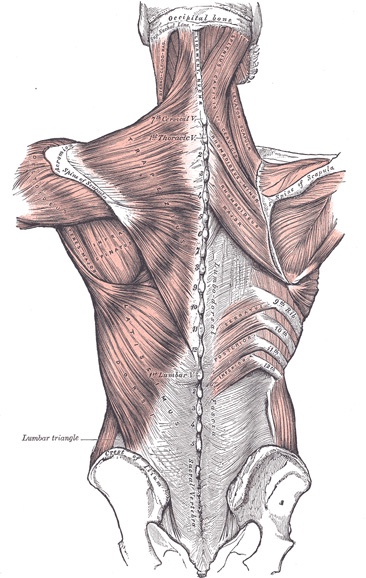
What separates deep tissue massage from Swedish massage is the depth of the pressure and the speed of the massage. The rule is that the deeper you go, the slower you go. Thus, if you are really having trouble with an area of your body, you may only have time in an hour massage to get that area worked. A full-body massage that is all deep work lasts at least 90 minutes and could last two hours. A look at the way muscles are layered may explain why.

In order to reach the deeper muscles, the massage therapist must first release the superficial muscles. To do this, the therapist may use fingers, hands, fists, knuckles, forearms, elbows, or various massage tools. This can take some time before the superficial muscles are relaxed enough for the deeper muscles to be reached. Less oil or cream is used so that there is less slip as greater pressure is slowly applied. Heat, cold, and sprays may also be used.

Muscles of back
Superficial and deep muscles of the back
Grey’s Anatomy

Let’s use the back muscles for an example. The superficial muscles of the back act on the upper limb. The intermediate muscles act on the ribs and thorax; the deepest muscles of the back are responsible for keeping the body erect.

If trigger points are found, the therapist may strip, friction or compress these to gain a release. Trigger points are taut bands of muscle fiber that do not relax and that keep the muscle in a shortened state. They are usually more painful than the surrounding muscle tissue, and they refer pain to other parts of the body. Trigger point therapy, also called neuromuscular therapy, is often combined with deep tissue massage. Its focus is these taut bands, and although trigger points can hurt as they are released, the therapist should not push beyond the pain threshold of a six or seven.

A true deep tissue massage focuses on the spreading and lengthening of the connective tissue sheath. Deep tissue techniques are based on the work of Ida Rolf who developed a technique called Structural Integration. Her principles have been widely adapted into other connective tissue massage therapies. 

Beneath the skin and connecting every part of the body is a fibrous sheet of connective tissue called fascia. The fascia surrounds the bones, muscles, and organs. Indeed, although it is is basically a single sheet of mesh, it wraps individual tissue fibers as well as the whole structure (ie, individual muscle fibers and the whole muscle). Thus, connective tissue health is essential to painless movement. If the surrounding fascia is restricted, so is the muscle. Denser connective tissue forms the tendons and ligaments.

Connective tissue is unique in that it is elastic, which allows it to be elongated. However, the therapist must employ precise levels of palpation, pressure and energy to effectively make changes in the tissue. Simply massaging, kneading or compressing the fascia does not change or elongate the connective tissue. Fascia and muscle are different types of tissue, and they require different approaches. Your therapist will be trained to apply these techniques.

The fascial layers are worked one at a time, progressing from superficial to deep just as with the muscle layers. The superficial layers must lengthen and become more elastic and supple before going to the next, deeper layer.

Often the reason deep tissue massage hurts is that the therapist may be trying to achieve releases too quickly. While it is appropriate to work at your pain threshold, the therapist should not exceed your threshold. If she does, it is up to you to tell her so. Furthermore, you may have to decide to forego a full-body massage and ask that the therapist concentrate on one troublesome area so she is not rushed. Alternately, you could schedule a longer massage appointment.

Finally, you need to drink water and take a hot bath in Epsom salts or apple cider vinegar when you get home. You always hear this after a massage, but do you do it? The water flushes toxins and helps keep the connective tissues hydrated so they can heal. The heat of the bath and the properties of the salts or vinegar also remove toxins and help relax the body more fully. Stretching or other exercises may also be helpful.

Deep work does not have to be painful if your therapist is knowledgeable and if you communicate with her about your pain level, You should be willing to limit your massage to a trouble area, to schedule a longer massage session, and/or to return for a follow-up visit to achieve the best results with minimal pain. Finally, you need to practice self-care and follow your therapist’s advice about proper hydration and post-massage detoxifying.

Massage & Bodywork, Tapestry Life Resource

Massage Cupping: Using Reverse Pressure to Relieve Pain

therapist massage cupping a client
Massage Cupping uses reverse pressure to release adhesions and relieve pain.

Massage cupping is an exciting modality with a wide range of benefits.

If you get acupuncture, you’ve probably been cupped as a part of your Traditional Chinese Medicine treatment. Massage cupping is a bit different in that the vacuum in the cup is created with a pump rather than with fire. Likewise, the cup is moved around on the body instead of being parked for a long period of time as it is in TCM.

There are many benefits to cupping. The pressure on the tissues pulls them up rather than pressing them down toward the bone as in regular massage. This is called reverse pressure. Cupping clears stagnation, drains and moves lymph and other fluids, relieves inflammation, expels congestion, and sedates the nervous system. It enables the therapist to do deep work with less discomfort to the client.

Cupping is helpful for a variety of conditions, including fibromyalgia, neuralgia, sciatica, edema, respiratory congestion, headache, sluggish colon, anxiety, insomnia, and scarring, to name a few. It can usually be added to your normal massage with no additional cost.

On the other hand, massage cupping can be a stand-alone treatment and is especially popular when combined with aromatherapy in a treatment called the Aromatherapy Cocoon Bodywrap. When done in a series of eight treatments over four weeks, the Aromatherapy Cocoon Bodywrap has been helpful in treating smoking cessation and weight reduction. The oils chosen for the sessions are very specific and therapeutic in their effect on the body.

Another popular treatment is the facelift massage, which can be combined with the Bodywrap or with the Bellanina Honeylift product. The negative pressure on the face and neck can bring nourishing circulation to the skin surface, stimulate collagen and elastin production, smooth fine lines, release tight facial muscles, and drain stagnant lymph that causes puffiness. A similar therapy can help the sinuses to drain more effectively although this should not be done if there is active infection in the sinuses. However, clients should understand that this is a massage treatment, not a facial.

If you are interested in the benefits of massage cupping, please speak to your therapist. Call  Suzanne Eller at 828-310-0161.