Massage Cupping uses reverse pressure to release adhesions and relieve pain.
Massage cupping is an exciting modality with a wide range of benefits.
If you get acupuncture, you’ve probably been cupped as a part of your Traditional Chinese Medicine treatment. Massage cupping is a bit different in that the vacuum in the cup is created with a pump rather than with fire. Likewise, the cup is moved around on the body instead of being parked for a long period of time as it is in TCM.
There are many benefits to cupping. The pressure on the tissues pulls them up rather than pressing them down toward the bone as in regular massage. This is called reverse pressure. Cupping clears stagnation, drains and moves lymph and other fluids, relieves inflammation, expels congestion, and sedates the nervous system. It enables the therapist to do deep work with less discomfort to the client.
Cupping is helpful for a variety of conditions, including fibromyalgia, neuralgia, sciatica, edema, respiratory congestion, headache, sluggish colon, anxiety, insomnia, and scarring, to name a few. It can usually be added to your normal massage with no additional cost.
On the other hand, massage cupping can be a stand-alone treatment and is especially popular when combined with aromatherapy in a treatment called the Aromatherapy Cocoon Bodywrap. When done in a series of eight treatments over four weeks, the Aromatherapy Cocoon Bodywrap has been helpful in treating smoking cessation and weight reduction. The oils chosen for the sessions are very specific and therapeutic in their effect on the body.
Another popular treatment is the facelift massage, which can be combined with the Bodywrap or with the Bellanina Honeylift product. The negative pressure on the face and neck can bring nourishing circulation to the skin surface, stimulate collagen and elastin production, smooth fine lines, release tight facial muscles, and drain stagnant lymph that causes puffiness. A similar therapy can help the sinuses to drain more effectively although this should not be done if there is active infection in the sinuses. However, clients should understand that this is a massage treatment, not a facial.
If you are interested in the benefits of massage cupping, please speak to your therapist. Call Suzanne Eller at 828-310-0161.
Taking care of ourselves physically and mentally/emotionally takes time and thought. If we don’t do it, it’s not going to happen on it’s own. If you are feeling headachy, stressed, anxious, depressed, tingly, heavy or whatever else, here is a list of things I’ve tried and have found success in getting myself back into physical and mental shape.
1. Get a massage – I mentioned this in another post not so long ago. Just do it. Get all your knots worked out. You’ll thank yourself.
2. Try acupuncture – Get your energies balanced so your body can function properly and you can feel calm and relaxed.
3. Go to a naturopathic doctor – Try some herbal supplements to regulate your body naturally and without side effects. When your body feels healthy, your mind will follow.
4. Get outside – Engage in physical activity. Go walking, jogging, biking…
According to WebMD, “The piriformis muscle is a flat, band-like muscle located in the buttocks near the top of the hip joint. This muscle is important in lower body movement because it stabilizes the hip joint and lifts and rotates the thigh away from the body. This enables us to walk, shift our weight from one foot to another, and maintain balance. It is also used in sports that involve lifting and rotating the thighs – in short, in almost every motion of the hips and legs.”
Piriformis
The piriformis is prone to trigger points, and if it becomes taut enough, it can press on the sciatic nerve, which usually runs underneath it but sometimes can run through it. Trigger points in the piriformis or an entrapped sciatic nerve can refer pain all the way down the leg. A tight piriformis may also torque the low back causing lumbar area pain as well. It’s a small muscle, but it can cause tremendous problems if it becomes taut or irritated.
Any number of things can cause the piriformis to become taut. Chief among these is sitting in one position for too long. If you have a job that requires sitting at a desk all day, chances are you know what a tight piriformis feels like. Likewise, activities that require climbing or repetitive motions like running, especially over uneven ground, can cause piriformis pain.
Massage is one of the best cures for piriformis pain, especially if you don’t wait until it becomes chronic. You can also use self-care strategies like rolling and pressing a tennis ball over the site or using a SacroWedgy®.
There a a number of good stretches for the piriformis as well. One is to lie on your back and to bend the knees. Cross the right leg over the left at the knee. Clasp your hands behind the bottom knee and pull both legs toward the chest. You should feel the stretch in the buttocks of the crossed leg. Repeat on the other side.
A variation of the above stretch is to sit in an chair, crossing your legs with one ankle over the knee of the other leg. Keeping your back straight, lean forward until you feel the stretch.
Another stretch is to kneel on the floor on hands and knees. Tuck the right knee under the body so that knee is in line with the left shoulder and straighten the left leg. Press the hips to the right until a gentle pull is felt in the right buttock. Repeat on the other side.
You don’t have to suffer with piriformis pain. Massage and self-care can keep you moving and help you avoid more serious problems like sciatic nerve entrapment.
The skin is our largest sensory organ. Massage can create a sense of peace and well-being through the power of touch.
It is sometimes easy to emphasize the physical benefits of massage and forget the mental health benefits of regular bodywork. The physical benefits are more immediately recognizable, but the mental benefits can be more lasting.
Numerous clinical trials have evaluated the effects of massage on mental and emotional health, and the results are impressive. For example, studies indicate that massage and psychotherapy given to women suffering from postpartum depression had significantly greater improvement in both depression and anxiety than did groups who received only psychotherapy.
Similar results were found for individuals other than new mothers suffering from depression and anxiety. Other studies indicate that massage may help people who suffer from ADHD, Alzheimer’s disease, and bipolar disorder, to name a few.
Jacqueline Young, author of Complementary Medicine For Dummies, (London: Wiley Publishing, 2007) gives evidence for the efficacy of massage in treating those with eating disorders. She says more and more clinics treating anorexia and bulimia are finding that massage helps clients reduce anxiety about their appearance and improve their body image.
Massage reduces levels of stress hormones, especially cortisol (which, by the way, can make you fat!) It increases the activity of the parasympathetic nervous system (“rest and digest”) and decreases the activity of the sympathetic nervous system (“fight or flight”). Improved parasympathetic response means greater availability of brain chemicals like serotonin, oxytocin, and endorphins (natural painkillers).
Another benefit of massage is to meet our need for safe, human touch. Human beings can literally die without human touch, and studies have shown the devastating lack of emotional development in babies who are not adequately held and cuddled. Still, we live in a world where those who touch inappropriately have caused all of us to be a little suspect of too much touching. When there is a lack of touch in a person’s life, massage can fill the void and create peace-of-mind. Overall well-being is enhanced.
Massage provides the following mental health benefits:
Increases mental alertness and improves concentration and memory.
Reduces anxiety and increases sense of overall well-being and self-confidence.
Reduces stress hormone levels and increases production of mood-enhancing brain chemicals.
Provides an overall calming effect and lowers irritability.
Lowers brain wave activity to the alpha state, which provides a feeling of relaxation and increases creativity and organizational ability.
Calms the nervous system and improves synaptic response.
Relieves fatigue and renews energy levels.
There is also a relationship between mental health and physical ailments. Many of us carry stress in our bodies. Idioms like “he’s a pain in my neck” and “my job’s a headache” reflect physical responses to stress-causing people and situations. Massage can help relieve the stress before it manifests as a physical symptom.
If one of your New Year’s resolutions included losing a few pounds, you need to know about the benefits of regular massage. Massage reduces stress levels and can help your muscles release toxins after a workout.
As odd as it may seem, relaxation is key to losing weight. Studies indicate that long-term stress, not over-eating, may be at the root of many people’s inability to shed unwanted pounds.
The adrenal glands produce two hormones that come to our aid and trigger the “fight or flight” response. One of these is adrenaline, and the other is cortisol.
Cortisol’s job is to help your body produce more glucose from protein so that you have energy to confront or evade a threat. When cortisol is released as a response to run-of-the-mill, everyday stressors instead of a real “fight or flight” dangers, the excess glucose is converted to fat.
Typically, this cortisol fat is abdominal fat, which is one of the most dangerous kinds of fat to our health because it is related to greater danger of diseases such as heart disease, stroke, diabetes, and hypertension&emdash; all diseases that have a connection to stress.
Excess cortisol in the blood can also lead to depression, which in turn can lead to unhealthy emotional eating, especially of foods that ramp up production of the feel-good brain chemical, serotonin. Chocolate and most starchy carbs fall into this category.
Research in several studies indicates that even a 15 minute chair massage can reduce cortisol levels. Cortisol levels did not drop in control groups. Furthermore, reduction of cortisol acts to boost the immune system generally, decrease pain, and induce more restful sleep. Clearly, massage can be seen as preventative health care and not just as an indulgence.
Another way massage can help with weight-loss is by making workouts easier. Massage therapists can employ PNF (Proprioceptive Neuromuscular Facilitation) stretches or other techniques to improve your range of motion. Likewise, massage works to increase circulation and lymphatic flow so that you can better release the waste products that build up during a workout. Improved circulation and lymphatic flow helps to heal the microscopic tears in the muscle fibers that come from unaccustomed exertion by taking oxygen and white blood cells to the site of injury. In fact, massage is an integral part of most professional athletes’ training regimen.
Releasing trigger points will also improve your range of motion and make workouts easier and their aftermath less painful. Trigger points are taut bands of muscle that inhibit movement and refer pain to other sites in the body. When the rest of the muscle relaxes, they stay contracted, and the result is pain.
Other massage techniques that helps you lose weight are lymphatic drainage and massage cupping, a technique that applies “reverse pressure” to the body, using glass or plastic suction cups that are massaged along problem areas in the direction of natural lymphatic flow. Both methods help the body release dead cells (including fat cells) and may stimulate sluggish metabolism.
Although it sounds contradictory to add a relaxation component to a weight-loss plan, massage has proven itself to help people reduce the stress that can cause weight gain and to improve athletic flexibility, performance and recovery time.
One unusual World War I hero fought in seventeen battles, received a gold medal from the Supreme Commander of the Armed Services John “Blackjack” Pershing, and was honored by three presidents. He even has an exhibit in the Smithsonian Natural History Museum.
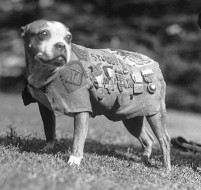
Sgt. Stubby was the unofficial mascot of the 102nd Infantry Regiment in World War I. He served eighteen months and participated in seventeen battles. He is the only dog to be promoted to sergeant through combat.
His name is Sgt. Stubby, and he is a dog.
Stubby, a brindle and white pit bull-terrier mix with a stub tail, was adopted by Pvt. Robert Conroy after the pup wandered onto the military training ground of Yale University in the spring of 1917. Dogs were forbidden in military camps, but Stubby so lifted the morale of the soldiers that officials allowed him to stay.
Stubby was smart. He learned the meaning of the different bugle calls and marched with the soldiers on drill, keeping step with them. He even learned to salute by lifting his right paw to his right brow, following the lead of his fellow soldiers and saluting when they did so.
When the troops shipped out to France on the USS Minnesota, Pvt. Conroy smuggled Stubby aboard, hiding the dog in a coal bin until the ship was far at sea. Once on deck, Stubby quickly won the hearts of the sailors just as he had won over the soldiers. When the commanding officer discovered a dog on board ship, Stubby saluted, and the CO laughed then allowed Stubby to stay and participate in training drills.
When the regiment went to the frontlines of the Western Front, Stubby went with them, this time with a special order from the Colonel. Stubby quickly became the mascot of the 102nd Infantry, 26th Yankee Division, and he soon proved his heroism.
During heavy fire, Stubby ran back and forth among the trenches, locating injured soldiers and barking until help arrived or leading others away from approaching bombs and shelling to safely (he could hear the bombs approach). His first injury was when he was exposed to poison gas and had to be sent to the field hospital. After he returned to the regiment, he was highly sensitive to the tiniest, trace odor of gas. Once, during an early morning gas launch while most of the soldiers were asleep, Stubby sniffed the odor of gas and ran through the trench barking and biting the legs of the troops until everyone was awake and able to don their gas masks. He saved their lives.
Stubby was also deemed a hero when he caught a German soldier crawling in the Allied trenches making maps. Stubby barked and clamped his teeth onto the enemy spy’s leg until his comrades arrived to take the spy into custody. For this act of heroism Stubby was promoted to Sergeant by the CO of the 102nd Infantry. He now outranked Conroy who had been promoted to Corporal.
Before the war was over, Stubby was injured again, this time by shrapnel from a grenade. He was sent to the Red Cross Recovery Hospital where he received treatment for chest and leg wounds. While recuperating, Stubby visited the other patients and cheered them, maintaining his role a morale-booster even when he was injured himself.
After the war, while still in France, Stubby lead the review parade of the American troops past President Woodrow Wilson. Later, he won lifetime membership in the American Legion and the American Red Cross. He marched in Legion parades and met Presidents Warren Harding and Calvin Coolidge. Stubby’s person, Cpl. Conroy, attended Georgetown University where Stubby amused football fans during halftime by nudging the football around the field. Georgetown’s canine mascots still keep this tradition.
Stubby was awarded many medals, chevrons, and pins for his heroism, including a gold medal from the Humane Society. He wore his medals on a blanket “uniform” made during the war by the women of Chateau Thierry, France. Today his uniform is displayed at the Smithsonian Institute in “The Price of Freedom” collection.
Sgt. Stubby died on March 16, 1926. His service to his country paved the road for military and civilian recognition of the value of canines in combat and for the creation, during World War II, of the first K-9 Corps. Sgt. Stubby is the “Grandfather of American War Dogs”.
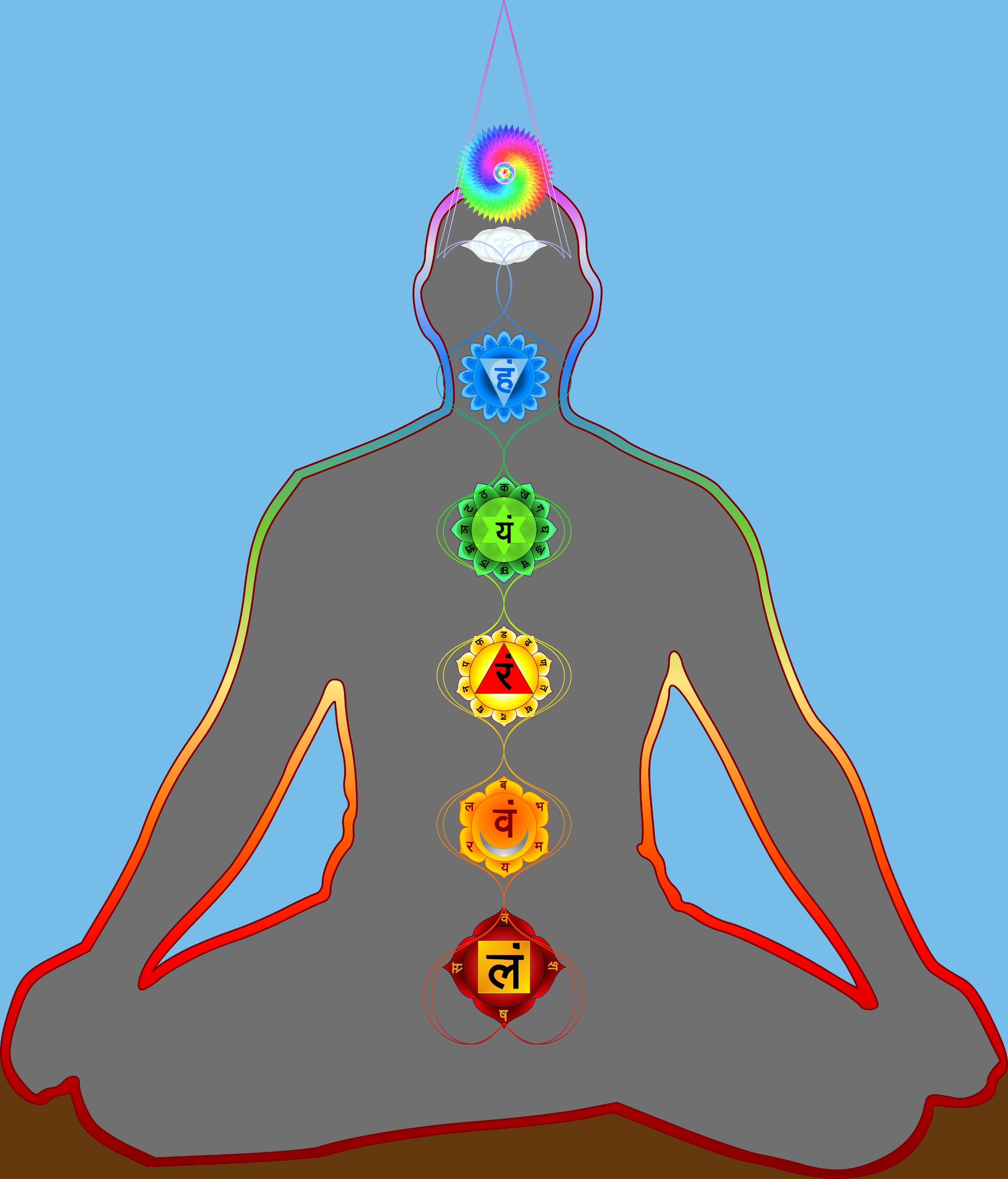
Aryuvedic tradition describes seven major energy centers that run along the spine and spiral out the front and back of the body in clockwise vortices. The Sanskrit word for these centers is chakra, meaning “wheel of light”.
From Wikimedia Commons. Modified from original by Mirzolot2.
Modern research in physics and biophysics suggests that these energy centers are also the sites of consciousness, which means consciousness is located throughout our bodies, not just in our brains. It also means that though most of us cannot see chakras, their health is vital to our humanity and our optimal growth.
Each of the seven major chakras corresponds to an electromagnetic field or “body” sometimes called the aura. Disruptions to the healthy functioning of the chakras can be detected in one or more layers of the auric field by trained energy workers and special machines that measure or photograph the electromagnetic charge and the photons emitted. They are probably picked up unconsciously by everyone. That is why some people calm us while others give off “bad vibes”.
Each of the seven major chakras seems to exert influence over specific physical, emotional, mental, and spiritual functions. For example, a disruption of the throat chakra might show up as thyroid problems, timidity, inability to express oneself clearly, and conflict between actions and religious convictions. (See forthcoming articles on each chakra for more information.)
Besides the seven major chakras, there are numerous secondary chakras throughout the body, most commonly located at the joints and nerve plexuses including the palms of the hands. Biophysicists across the world have shown that these secondary chakras may be responsible for a kind of cellular communication within our own bodies and between ourselves and others on an unconscious level. For example, mothers and children may literally communicate through light and other frequencies emitted from the secondary chakras so that a mother knows when her child is hurt or the child knows when the mother is gone. Dysfunction of the secondary chakras can cause delays in the healing process and/or a breakdown in the immune response.
One of the most respected teachers of chakra theory in the western world is Rosalyn L. Bruyere. She has been studied by such scientists as Dr. Valerie V. Hunt at UCLA in the famous Rolfing Study (Rolfing is a kind of massage), Dr. Fritz Albert Popp in a biophoton research study, Dr. Elmer Green in studies at the Menninger Clinic, and in a study on brain-damaged children at the Kennedy Krieger Institute of Johns Hopkins University, to name a few. Her web-site has links to many f these studies.
Bruyere is also the teacher of other respected energy healers. One of the most well-known of these is Barbara Brennan, who is renowned world-wide for her work with chakras as well.
According to Bruyere, aligning any one chakra helps to align the others, and while it is usual for energy workers to discuss chakras as being open or closed, it is more accurate to say that they are blocked or that the energy flow of a particular chakra is inhibited. Similarly, chakras can be over-excited, which also causes disease.
Bruyere also says that each chakra has a viewpoint or “prime directive”. When one of our chakras is over- or under-functioning, we have too much or too little of that chakra’s viewpoint in our lives. This will be discussed in more detail when we explore the function of each chakra.
“It has taken thousands of years, but within this century both scientists and spiritual seekers alike have once again begun to view the laws of nature and the laws of God as reflections of the same truth.” ~Rosalyn L. Bruyere
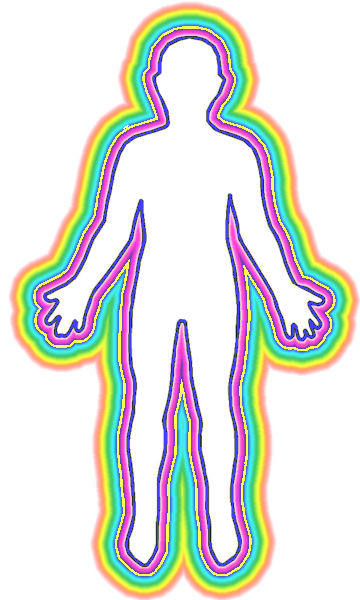
The aura surrounds the physical body in layers. Public domain image.
The auric field is has been measured by scientists as electromagnetic current that extends through and from the body for at least six feet, more or less, in the average healthy person. As each chakra spins, it creates its own electromagnetic field, which in turn combines with the other chakra fields to produce the aura. Each chakra ans the corresponding field have a particular frequency or vibration. With practice, you can feel the frequency of the field and of the chakra.
Bruyere’s book, Wheels of Light, includes a chapter in the appendix that gives the scientific research into verification of the aura. Barbara Brennan’s book, Hands of Light, gives one of the best descriptions of the correspondence between chakra and auric field. I am using Brennan’s descriptions of the aura here. She describes them as being in layers, with the etheric layer closest to the physical body.
However, it should be noted that other authors may disagree with Brennan because sensing the aura and the chakras is somewhat subjective to the energy worker him/herself despite the plethora of scientific research. That is one reason energy medicine is still having trouble achieving respectability among scientists who follow Newtonian rather than quantum physics. Likewise, the descriptions of the chakras and the aura are at least as old as the Hindu Upanishads. As with all ancient wisdom, understanding of the chakra system varies in interpretation from generation to generation as personal experience and now scientific verification adds to the body of knowledge.
The first chakra, called in Sanskrit the Muladhara, meaning wheel of the root/support. It is considered to be the seat of the physical body and is located the the base of the spine. It creates what Brennan calls the etheric body in the aura. It is equivalent to a blueprint for the physical body and is the densest and most easily sensed of the auric layers. Those who can see auras may describe it as looking like blue or gray vertical grid lines. It can be sensed in other living things as well though the color may vary according to the organism.
The second chakra in Sanskrit is called the Swadisthana or Svadisthana, meaning the abode of self. It is situated just behind and below the navel near the sacrum, and in Taoism and Traditional Chinese Medicine it is called the hara or tan tien. It creates what Brennan calls the emotional body. She describes it as being more fluid than the etheric body and varying in colors somewhat like many colored clouds. The colors change from brilliant to dull according to the emotional condition of the person. For example, clear feelings whether they be love or anger are brighter whereas confused feelings are darker and duller.
Manipura is the Sanskrit name for the third chakra. It means wheel of the jeweled city. Located on the spine near the solar plexus, it creates the mental body in Brennan’s description. Like the etheric layer, it is more structured and is mostly yellow in color. It, too, has a grid-like quality but not so pronounced as the etheric body. Brennan says it expands and becomes brighter when we concentrate or think deeply. It may also change color if we are engaged in habitual thought processes almost as if we are giving our thoughts literal form.
The fourth chakra is located near the heart and is called in Sanskrit Anahata, meaning wheel of the unstuck. It creates the astral body of the aura. Like the emotional body, it is composed of clouds of color, but Brennan says they are more beautiful and have a rose tint that indicates the influence of the chakra’s connection with love on the auric layer. Indeed, she says the layer becomes more rosy when we fall in love. Apparently, we connect with people through the energy of this auric layer, and the connection can be pleasant or not depending on the intentions that pass between us. Research done at the Heartmath Institute seems to confirm this assumption.
The fourth chakra marks a connecting point. While it is a common mistake to assume the lower chakras are somehow “less-than” the upper ones, the lower chakras are more concerned with incarnational, physical existence in the manifest world. The upper three chakras are typically described as influencing our spiritual nature. The heart chakra is the bridge that connects the mundane and the spiritual. However, one aspect is no less important than another. All parts of us make the whole, and blocks in any one chakra affect all of our being.
The fifth or throat chakra is on the cervical spine and is called in Sanskrit Vishuddha, meaning pure wheel. Brennan calls the firth layer the etheric template because it “contains all the form that exist on the physical plane in a blueprint or template form” (Brennan 52). She describes it as looking somewhat like a photographic negative though it does have cobalt blue grid lines just like the etheric layer that it supports and creates.
“The etheric template level of the aura creates an empty or negative space in which the first or etheric level of the aura can exist. The etheric template is the template for the etheric body, which then forms the grid structure … upon which the physical body grows.” ~Barbara Brennan
The sixth chakra is sometimes called the third eye or brow chakra because of its location at the top of the spine and in the midbrain. In Sanskrit it is called Ajna, which means command wheel. Brennan calls the body that corresponds to Ajna the celestial body. It is the emotional layer of the spiritual plane. It has pastel colors and an opalescent shine. It is associated with spiritual connection to God, the universe and all creation and is characterized by unconditional love. Just as the fifth layer helps support and create the first auric layer, the sixth layer supports and creates the second or emotional layer.
The seventh chakra is the Sahasrara in Sanskrit and means thousand-petaled wheel. It is located at the crown of the head. The crown chakra creates the ketheric template or the causal body. It is the mental level of the spiritual body and forms the outer, golden-silver egg-shape of the auric field. It is the strongest and most resilient level of the auric field. It is at this level that we know we are one with the creator.
Science has shown that disease often shows up in the aura before it shows up in the physical body. However, energy healing is not some esoteric or psychic ability that only a few gifted people are blessed to have. Naturally, there are some who more natural ability and others who have developed their abilities more than the rest of us, just like there are some athletes that can run faster than the rest of us. However, we all have the ability to use energy to heal, and we do so whether we realize it or not. We don’t have to see or sense auras to do it, either.
Every time a mother kisses a “boo-boo” to make it well or a friend holds the hand of sick loved-one, we share healing energy. Sometimes it sounds pretty woo-woo, but it is truly one of the most basic ways in which we relate and support one another. It is likely the way that Jesus healed, and he told us that what he could do, we could also.
Learning about the energy field can make us more sensitive to it, but we should all remember that any loving-kindness we show to each other and all loving thoughts have healing potential.
Bibliography
Brennan, Barbara. Hands of Light: a Guide to Healing through the Human Energy Field. New York: Bantam Books, 1988.
Bruyere, Rosalyn L. Wheels of Light: Chakras, Auras, and the Healing Energy of the Body. New York: Fireside Books, 1994.
Childre, Doc and Howard Martin. The HeartMath Solution: The Institute of HeartMath’s Revolutionary Program for Engaging the Power of the Heart’s Intelligence. New York: HarperCollins Publishers, Inc., 1999.
Dale, Cyndi. The Subtle Body: An Encyclopedia of Your Energetic Anatomy .Boulder, CO: Sounds True, Inc., 2009.
Ellis, Richard. Reiki and the Seven Chakras: Your Essential Guide. London: Vermillion, 2000.
Hunt, Valerie V. Infinite Mind: Science of the Human Vibrations of Consciousness. Malibu: Malibu Publishing, 1996.
Joy, W. Brugh. Joy’s Way.New York: Tarcher/Putnam, 1979.
McLaren, Karla. Your Aura and Your Chakras: The Owner’s Manual. York Beach, ME: Samuel Weiser, Inc., 1998.
McTaggart, Lynne. The Intention Experiment. New York: Free Press, 2007.
Myss, Caroline. Anatomy of Spirit: The Seven Stages of Power and Healing. New York: Harmony Books, 1997.
Schwartz, Gary E. The Energy Healing Experiments: Science Reveals Our Natural Power to Heal. New York: Atria Press, 2007.
Voigt, Anna. The Chakra Workbook: A Step-by-Step Guide to Realigning Your Body’s Vital Energies. San Diego: Thunder Bay Press, 2003.
I received an email this week from a new client who has been suffering from a headache lasting a week. I remembered reading a series in Massage and Bodywork Magazine, a publication of the Associated Massage and Bodywork Professionals (AMBP)), by Til Luchau. I pulled them out and reread them. Then I did a little more research online.
Luchau divides headaches into two broad categories: tension and musculoskeletal headaches in one category and migraine and other vascular headaches in the other. I’d add a third category: sinus headache. TMJ headaches might be a fourth category, and the general protocols for TMJ jaw pain often relieve the headaches as well. However, these headaches might be better categorized as a subset of TMJ dysfunction.
Luchau provides a chart for musculoskeletal/tension and migraine/vascular symptoms in his first article. My other research differs a bit on some points, but is in general consistent with Luchau. Understanding the symptoms is important because slightly different massage techniques are used for each type of headache. The image below offers a capsule version with hunger and eyestrain headaches omitted in the discussion that follows.
Common types of headaches
Tension headaches often arise when the muscles on the shoulders, back of the neck, under the occiput (posterior inferior cranium), and scalp become tight and pull on the scalp and the lining (dura mater) under the skull. Clenching the teeth is also a tension response and can cause headache even if TMJ dysfunction is not present.
Usually, tension headaches occur on both sides of the head, but if the musculature on one side of the body is tighter than the other, the pain may be worse on that side. It may also be worse in the back of the head, but depending on which muscles are hypertonic, it can be located almost anywhere. The pain is often a dull ache, but it may be more severe. It sometimes feels like squeezing or tightness in the head. Physical activity usually does not exacerbate it.
According to Luchau, the hands-on goal of working with tension headaches is to reduce the myofascial tension.
Sinus headaches are caused when the mucous membranes that line the four air-filled sinus cavities become irritated and swollen. The sinuses produce more mucus as a response, and the mucus that normally serves to moisten the air and soothe the sinuses becomes thicker and adds congestion that further blocks the sinus passages often creating a vacuum within them.
The pain is usually felt as pressure and/or tenderness just behind the eyes, cheeks, and forehead or near the upper teeth or temple regions. The pain may worsen if you lie down although lying down may reduce the pain of tension and migraine headaches. Bending over usually makes sinus headache worse. Your face may be noticeably swollen from a sinus headache.
If the cause of a sinus headache is infection, massage is contraindicated, and you should see a doctor immediately. Otherwise, massage with a hands-on goal of stimulating lymphatic drainage and relieving blocks caused by swelling and congestion may help.
Migraines are believed to be caused when the blood vessels inside the head dilate. Many migraine remedies include vasoconstrictors for this reason. However, according to Lachau, new research may point to another cause.
“Recent research suggests that migraines start as waves of nerve cell hyperactivity sweeping across the brain; the spreading waves in turn activate pain-signaling neurons in the brain stem. The root cause of these neuro-electrical ‘brain storms’ of abnormally increased activity is unknown. The hyperactivity is followed by inhibited nerve cell excitability; the cells seem to be worn out, and this exhaustion may explain difficulty speaking or thinking clearly after migraines” (Luchau, Sept./Oct. 2010).
The pounding or throbbing, sometimes stabbing, pain of a migraine is usually focused on one side of the head. It is frequently preceded by an “aura” or visual disturbance and is accompanied by nausea and sensitivity to light, sound, and odors. Physical activity can make it worse.
Most migraine sufferers have ideas about the triggers that cause their headaches and the symptoms that signal one is starting. They may also know that the massage protocols that work on tensions headaches often have little lasting effect on a migraine. Luchau’s hands-on goal of migraine massage is to reduce cranial compression, and I would agree that even if the migraine is initially triggered by muscular tension or sinus blockage, by the time it is a full-blown migraine, work on the cranium and the cranial fascia is necessary to relieve it.
Sometimes it is hard to tell what kind of headache it is. Generally, a look at the location and quality of the pain and at the response to activity and sensory input can help identify the type of headache you have. However, if you have a sudden, severe headache with no history of migraine headache or a dull headache that will not respond to treatment, you need to see your doctor immediately. Headaches can be a symptom of severe and even life-threatening conditions, stroke for example, and should not be ignored.
The massage protocol for a tension headache will include release of tight neck, shoulder and chest muscles and general relaxation strokes. Luchau’s first article emphasized release of the superficial and deep fascia of the scalp and a concentration of the suboccipital regions. I would add trigger point therapy of specific muscles likely to contribute to headache pain. Indeed, numerous research studies have cited the efficacy of massage, including specific pain-relieving modalities and more general relaxation type massage which tends to improve overall structural alignment and release endorphins into the body, as greatly relieving symptoms of tension headaches and even preventing headache recurrence when massage is received regularly.
Sinus massage with use of lymphatic drainage therapy is effective for relieving the pressure in the sinuses. (See my recent newsletter article on Sinus Massage.) The Lymph Drainage Therapy technique is slow and precise, and it uses feather-light strokes to move the lymph out of the head and into the nodes. It may also include the use of aromatherapy to further open the sinus passages.
Migraine headaches respond well to Craniosacral Therapy, especially intraoral work. CST allows the therapist to decompress the bones of the cranium and balance the blood flow. It also allows for structural realignment. Luchau’s technique uses a little more pressure than CST, but it is similar. (Trigger point therapy is often not as effective on migraines and on tension headaches.)
According to Luchau, the effect of this cranial work may be to reduce the pressure on the trigeminal nerve or to affect the hypothalamus and pituitary glands which may be responsible for the “brainstorm” of nerve cell hyperactivity mentioned in the quote above (Luchau, Nov./Dec. 2010).
Regular massage may also increase serotonin levels in migraine sufferers and thus prevent recurrence. Serotonin is a neurotransmitter and low serotonin levels have been indicated in migraine sufferers. Low serotonin also causes depression, seasonal affective disorder, addictions and eating disorders.
Two other modalities that seem to reduce headache pain are Myofascial Release and Reiki. Myofascial Release used gentle, light traction and stretching to release the fascia, which is a single sheath of connective tissue that covers the muscles, bones, organs, and even the cells (everything!) inside your body. Craniosacral therapy and lymph drainage therapy always incorporate myofascial release as do other modalities, but it can be used as a “stand-alone” modality. Reiki is one of a number of energy modalities that can be used to work on the subtle energy body. In many cases, this gentle therapy alone can relieve the headache.
Massage has been proven in study after study to decrease the severity and frequency of headaches. When you see your therapist, be sure to tell her the following to help her determine the best therapy protocol for your specific needs:
Where your pain is located
How long you’ve had the pain and if it comes and goes
How often you have headaches in general
If you’ve seen a physician and if so, what is the diagnosis
What precipitated the headache if you know
What is the quality of the pain (dull, throbbing, stabbing)
How movement and sensory stimulus affect the pain levels
What you have done to relieve it, such as taking pain relievers or using cold compresses, before coming to her
Headaches do not have to be a fact of life. Self-care and regular massage can be of great help in preventing them and relieving them when they do occur.
Foot care is especially important for the diabetic. Have your therapist look for cracks and ulcerations and be aware of too deep pressure you might not feel. Image by HealingDream at FreeDigitalPhotos.net Click link at end of article to see HealingDream's portfolio.
One of my personal goals is to learn something new about massage and bodywork each day. Sometimes that is a new technique, and sometimes it is new information about a pathology or condition presented by one of my clients.
One of my regular, weekly clients has mild Type II diabetes. She also suffers from being overweight and from arthritis, and although very active in her life, her range of motion is impaired by her ailments. Massage and regular chiropractic appointments make her feel better and help improve her ability to do the things she enjoys with greater ease of movement.
I’ve been trying to discover the reason for her toe cramps for a while now. Other massage therapists have suggested that these might be caused by mineral deficiencies (potassium, magnesium, and calcium primarily), dehydration or by the massage releasing a muscle and thus causing the antagonist areas go into spasm. My client has tried many of the suggested remedies, plus homeopathic quinine and switching to lite potassium chloride salt. She even put a cork under her pillow although that folk remedy didn’t work.
My client’s regular doctor suggested, however, that the cramps might be related to her diabetes. That led me to do more research, and I’ve learned a good bit in the last week about diabetes and massage.
First, I learned that if the cramping is related to the diabetes, it may be coming from the drug she is using to control her sugar levels. The cramping may also be a complication of Type II diabetes itself though it is not as well-known as neuropathy or even the skin hardening that may precede neuropathy. Ulcerated skin is one of the worst of these related complications, so while I advise using the mineral supplements with the doctor’s approval, I also want my client to be vigilant for any decrease in feeling in her feet and toes.
I also learned some general things about diabetes and massage. In general, massage is beneficial for people who have diabetes. Massage helps the client relax and release endorphins which in turn helps blood sugar levels balance to healthy levels. Similarly, massage improves circulation, which in turn improves cellular insulin uptake. Finally, regular massage improves the elasticity of the connective tissue and makes movement easier.
This last benefit got me thinking about how often the superficial tissue of my diabetic clients seems stretched unusually taut and how often even light pressure seems to cause an unusual pain response. So I began to do more digging. What I discovered is that increased blood sugars cause connective tissues to thicken and even harden. The is true of the superficial fascia and also of the deeper fascia that surrounds the muscles, muscle fibers and the organs themselves. The thickening also causes swelling because lymph flow is restricted and further inhibits the range of motion. The skin itself can become dry, calloused and cracked. No wonder my client hurts!
I always work slowly, releasing the superficial connective tissue before working individual muscles. This is the way I was taught and is also an intuitive response as I palpate the tissues. Working slowly and broadly with long strokes, myofascial stretching and energy techniques first relaxes and releases the dense connective tissue before I begin using more specific deep tissue pressure and trigger point therapy on individual muscles.
I remember this same client telling me that her previous massage therapist often made her hurt for several days before she felt better. I suspect the MT went into the trigger points too quickly and caused damage to the connective tissue by not warming and melting it first. Now that I know about the effect of diabetes on the cellular density of the tissue, I will be even more careful to warm the tissue and proceed slowly to the deeper layers.
Another thing I learned is both a benefit and a caution. Massage can cause the blood sugar levels to drop as much as 20-40 points. Overall, this is a good thing, but if the client’s blood sugar levels drop too much while on the table or just after the massage, it could cause hypoglycemia and be dangerous. That defeats all the potential benefits of the relaxing massage.
Symptoms of a dangerous drop in blood sugar levels include:
Excessive sweating or clammy skin
Faintness or headache
Inability to awaken
Certain “spaced-out” tendencies, such as slow speech or clumsiness
Irritability
Personality changes
Rapid heartbeat
That’s why I went out to the store and bought some fruit juice boxes to have on hand in case I have a client on the table whose sugar drops too much. However, if you are diabetic and receive massage, you should have a snack in your purse or car and always tell the therapist if you need to stop the massage and take care of your blood sugar needs. I assure you, the therapist will be thankful. You also need to check your blood sugar levels for several hours after you leave the massage office because the effects of blood sugar lowering can continue for several hours.
Be sure to update your therapist about what medications you are taking, especially if you are taking insulin shots. The injection sites are particularly sensitive to massage, and although the tissue there may feel especially dense (causing the therapist to work there more), studies have shown that massage on injection sites can increase the rate at which the insulin enters the blood stream and further lower your blood sugar.
Finally, be sure you eat before the massage and that you are hydrated both before and after the massage. If you feel unusual, after the massage, don’t drive until you feel normal.
The beneficial effects of massage for diabetics seem to outweigh the contraindications. However, it is a must that you and your massage therapist communicate effectively. Share you needs and concerns, and realize that honest feedback allows you and your massage therapist to learn from each other and develop a supportive rapport.
I just returned from the AMTA-NC conference in Cary, NC, and spent two days learning techniques of Hawaiian Lomi Lomi massage from Brenda L. Griffith.
It was an amazing two days, not only because I got to network with other massage therapists, which is one of the benefits of belonging to AMTA, but because the techniques I learned easily incorporate themselves into my massage protocol. In fact, I’ve used some piece of what I learned in every massage that I’ve given over the last week.
Griffith, who is a former AMTA national president, studied with Aunty Margaret Machado in Hawaii in 1994 and 1995, and has taught classes in Lomi Lomi all over the United States. We spent most of the two days actually giving or receiving the work. The Lomi Lomi strokes are long and fluid and have been said to resemble a dance because the therapist moves her whole body to apply rather deep and yet soothing pressure through gravity and leverage.
Lomi Lomi is intuitive work. At the beginning of the session, the therapist sets her intention to help the client receive the greatest benefit and allow his/her body to balance and heal. Then using rhythmic, fluid motions with the forearms and the fleshy parts of the hands rather than relying on fingers and thumbs, the therapist uses long, full-body strokes to release blocked energy and tissues. Lomi Lomi feels wonderful to recieve, and as a therpist, I thouroughly enjoy giving the massage to others. It is almost as relaxing to give a Lomi Lomi massage as to receive one.
“Touch the body with a loving touch.
If your hands are gentle and loving,
Your patient will feel the sincerity of your heart.
His soul will reach out to yours,
And the Lord’s healing will flow through you both.”
~Aunty Margaret
Some of you will remember that a few years ago, I took a class in Huna from Angela Sherrill. Huna is the philosophy that underpins Lomi Lomi. Huna teaches that everything in the universe seeks harmony and love. Is it any surpise that one of the alternate names for Lomi Lomi is “loving hands massage”? With long, continuous, flowing strokes over the client’s body, Lomi Lomi’s goal is to nurture the client and help him/her relax and simply be. What could be more loving?
Each of my clients who has experienced Lomi Lomi since I returned from Cary has loved it. Two of the regulars commented, “That’s new, isn’t it? I like it.”
For that reason alone, I appreciate the work. Moreover, I really like the emphasis on resonating with the client from the beginning to the end of the massage and relying on my intuitive sense of what the client needs to tell me what to do next. I also like the gentleness of the work and its profound ablility affect the tissues deeply without causing pain. Finally, I like that it follows the philosophy of Huna, which emphasizes love, tolerance, acceptance, respect, and compassion for all beings; Huna has an energy work component that I’ve been using for some time now.
This week I am planning to do my first full Lomi Lomi massage since the class rather than just incorporting pieces of it into the massages I am already giving. I’ll switch from cream to oil, and I’ll try to use most of the techniques I learned. I am looking forward to that. However, I am sure I’ll continue to use parts of Lomi Lomi, just as my teacher Brenda L. Griffith does, in nearly every massage I give.






 Tapestry Life's Blog